
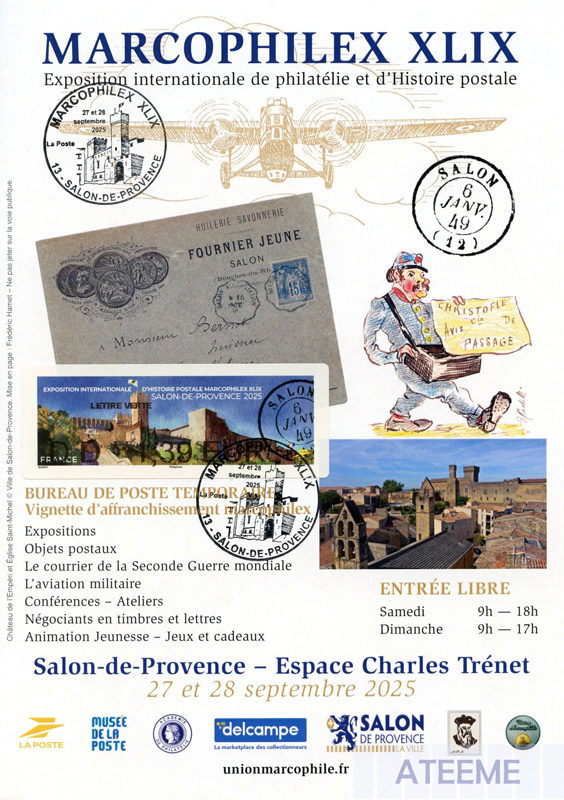
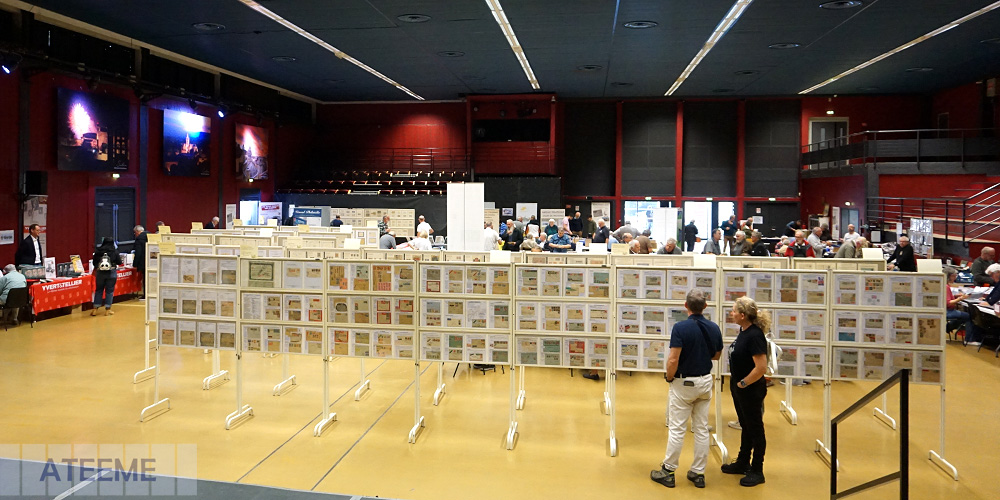
Just over a year since the 2024 Salon Philatélique de Printemps (see article), Salon-de-Provence hosted another major philatelic event in this case, MARCOPHILEX, the annual international philatelic and postal history exhibition and assembly. This was organised by the Union Marcophile, in collaboration with the local philatelic association, l’Amicale Philatélique Nostradamus.
The 49th Marcophilex was held over the weekend of September 27th & 28th at the Espace Charles Trénet, the same venue in the city centre that hosted the Salon de Printemps one year ago.
You can read articles on the earlier MARCOPHILEX exhibitions from 2012 onwards both on our previous website and in the issues of VARIABLE, and from 2023 on this website.
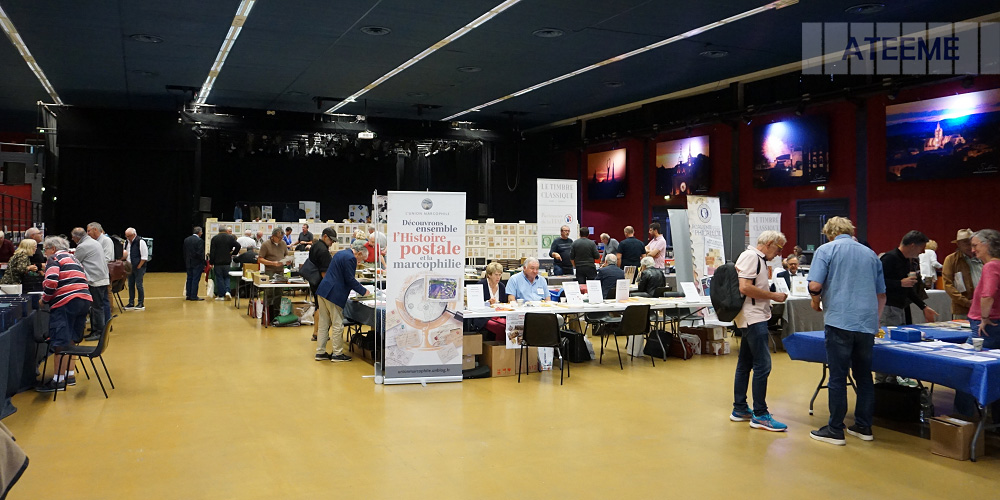
The Marcophilex in Salon-de-Provence brought together around fifteen stamp dealers and a dozen national philatelic associations. The exhibition consisted of 20 collections, all of which were featured in a special edition of ‘Les Feuilles Marcophiles’, the excellent publication of the Union Marcophile. It is worth noting in particular the collections on local marcophily and those commemorating the 80th anniversary of the end of the Second World War.
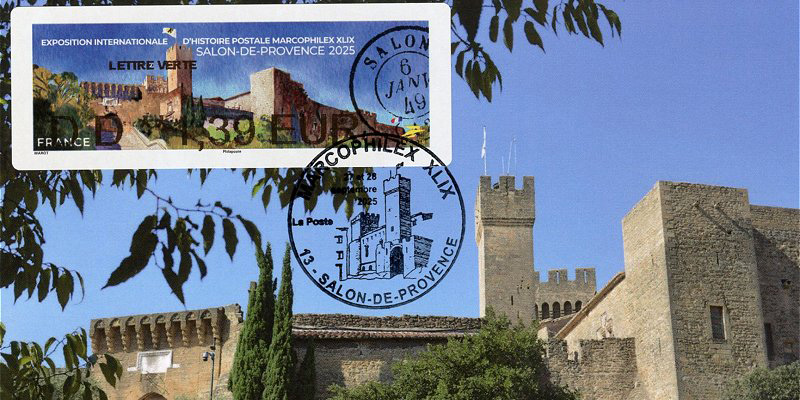
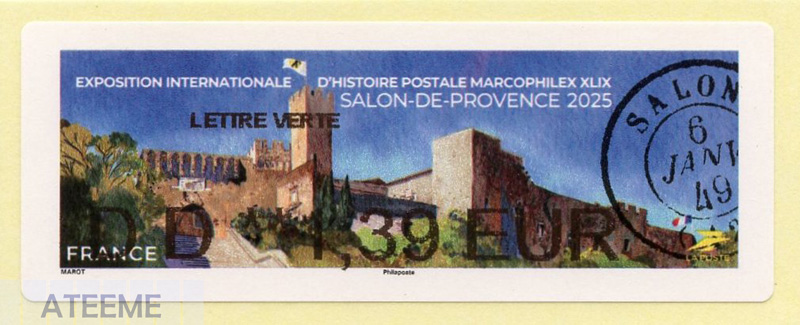
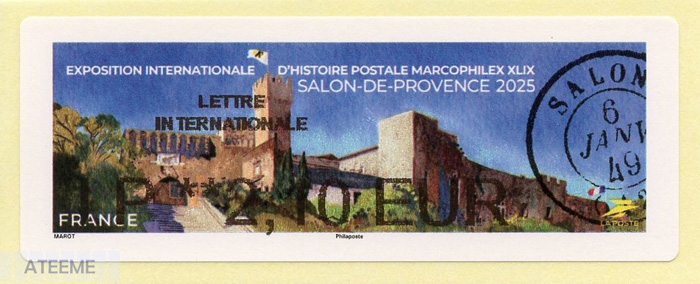
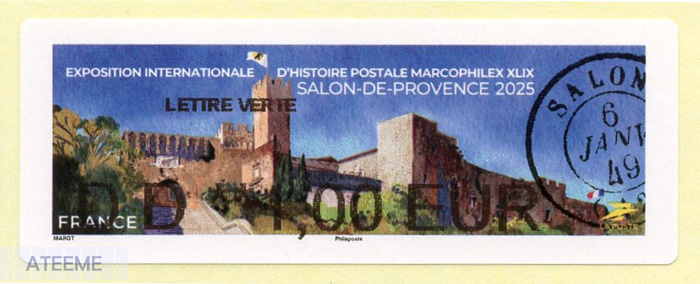
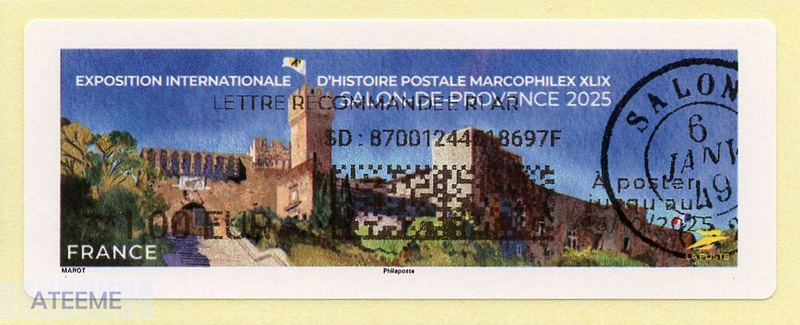
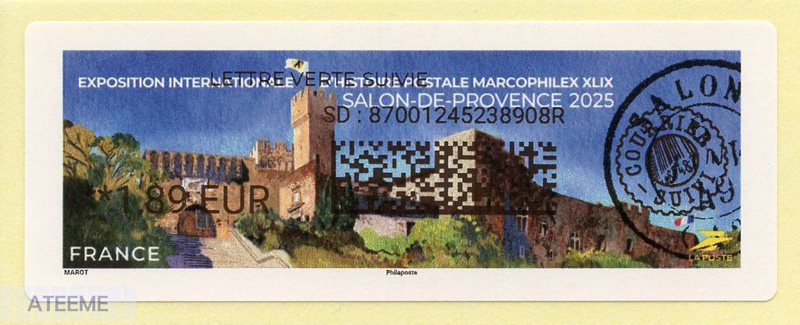
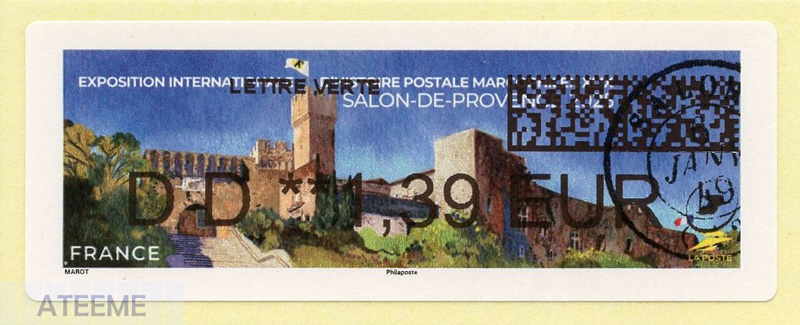
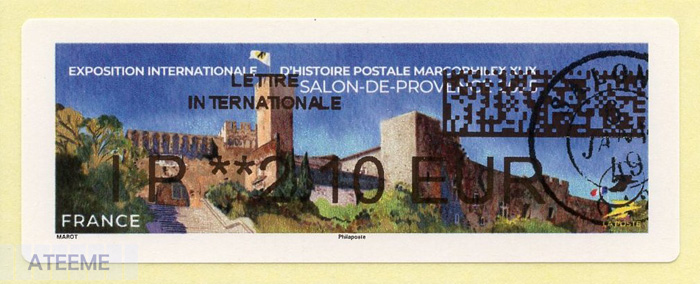
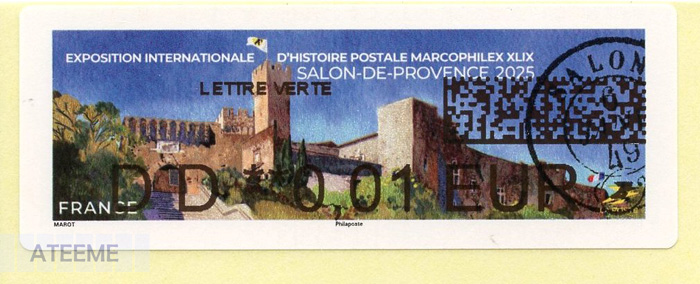
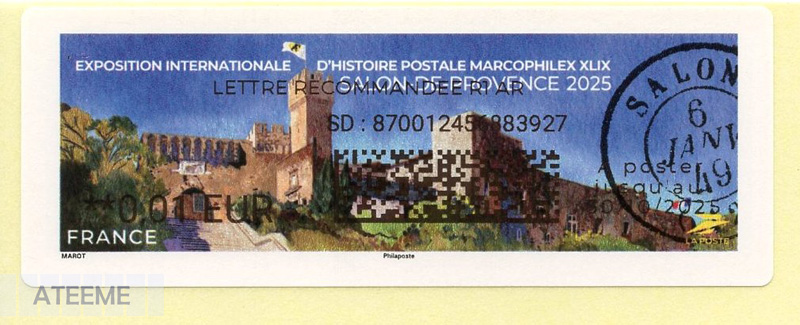
Once again, Philaposte produced a vignette LISA for this philatelic event, the 14th since it began producing special issues for Marcophilex in Épernay, in 2012 (see article and VARIABLE 27). While Philaposte’s LISA issue for the 2024 Salon de Printemps was dedicated to the Hôtel de Ville (article), Geneviève Marot’s design for Marcophilex features the Château de l’Empéri and the grand staircase leading up to it from the historic city centre.
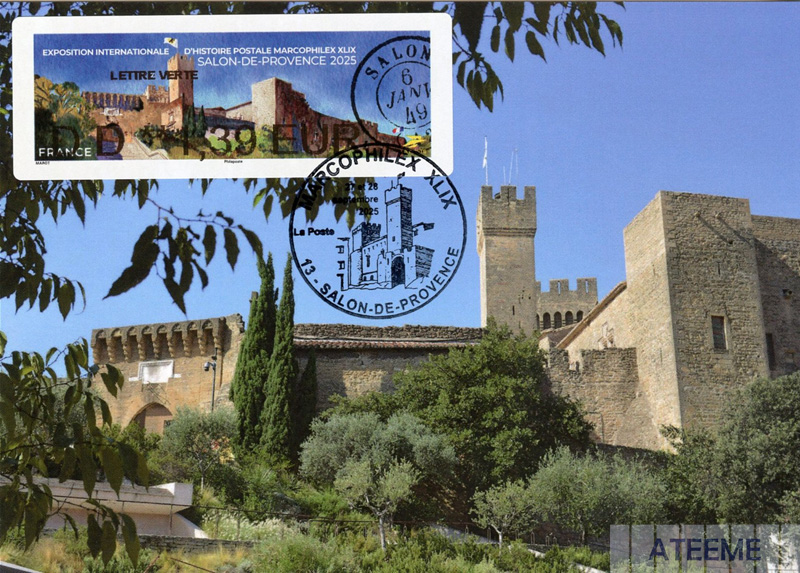
The special postmark (maximum cards below) is a design by Monika Novacka and also features the entrance gate and the two main towers, but seen from the inner courtyard of the castle.
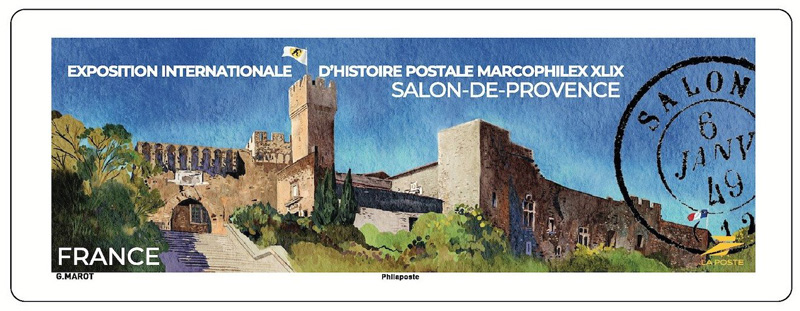
The composition includes, to the right, a postmark dated January 6th 1849, taken from the first (known) letter, with a stamp, sent from Salon.
Philaposte manufactured 15,000 self-adhesive thermal labels.
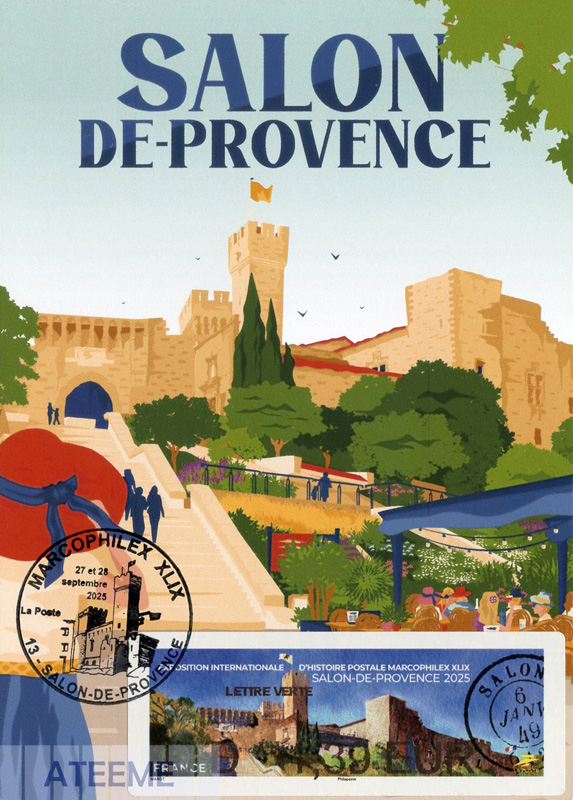
The Château de l’Empéri was built in the 9th century on a rock overlooking the region and is one of the largest fortresses in Provence. Once used as the residence of the archbishops of Arles and the German emperors, it is today, along with Nostradamus, one of the main symbols of the city.
The LISA issue was available at the two IER NABANCO kiosks set up on stage, opposite the La Poste stand and temporary post office. Both machines had been brought to the exhibition from the La Poste Jean Moulin post office in the north of the city.
The two kiosks had been pre-programmed with the “philatelic” programme, which limits the purchase options but removes the Datamatrix code and La Poste logo from the stamps printed for standard / ordinary mail.
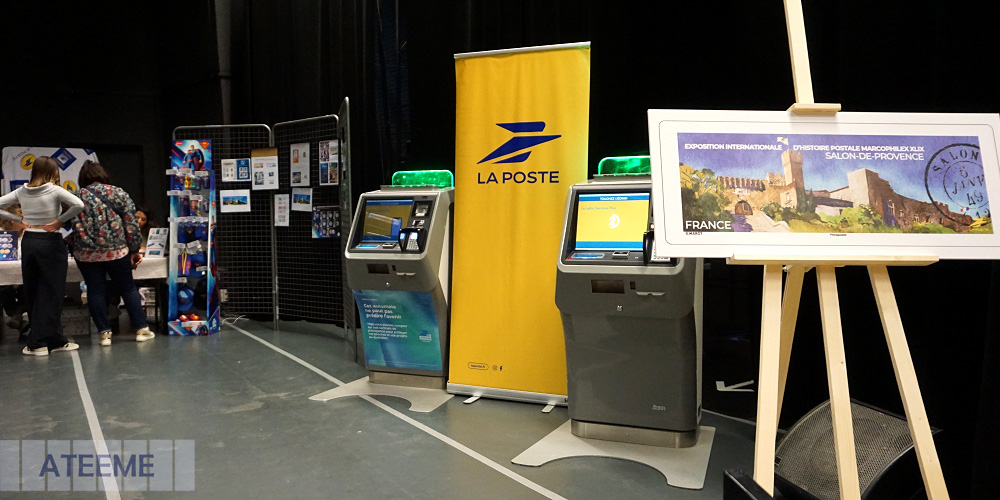
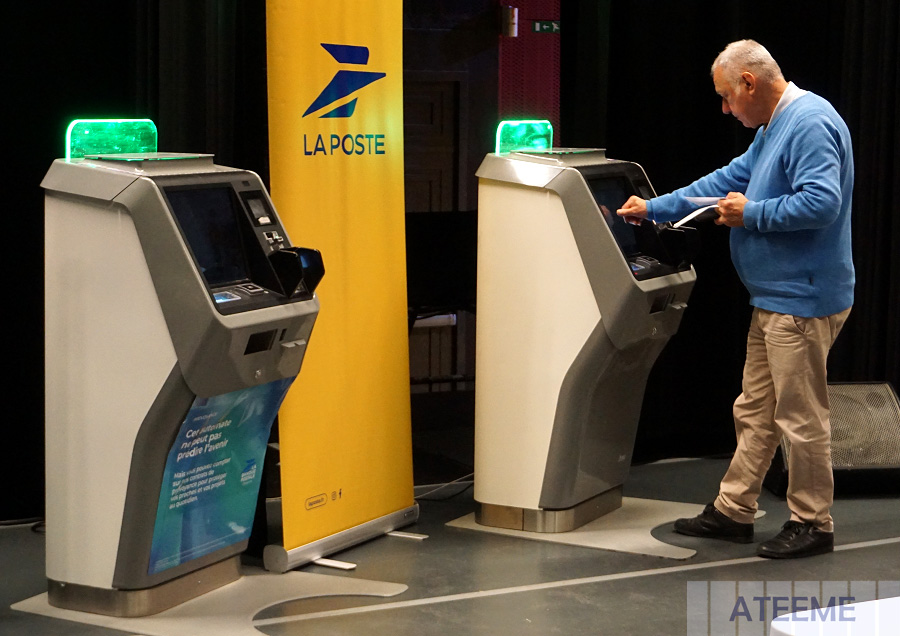
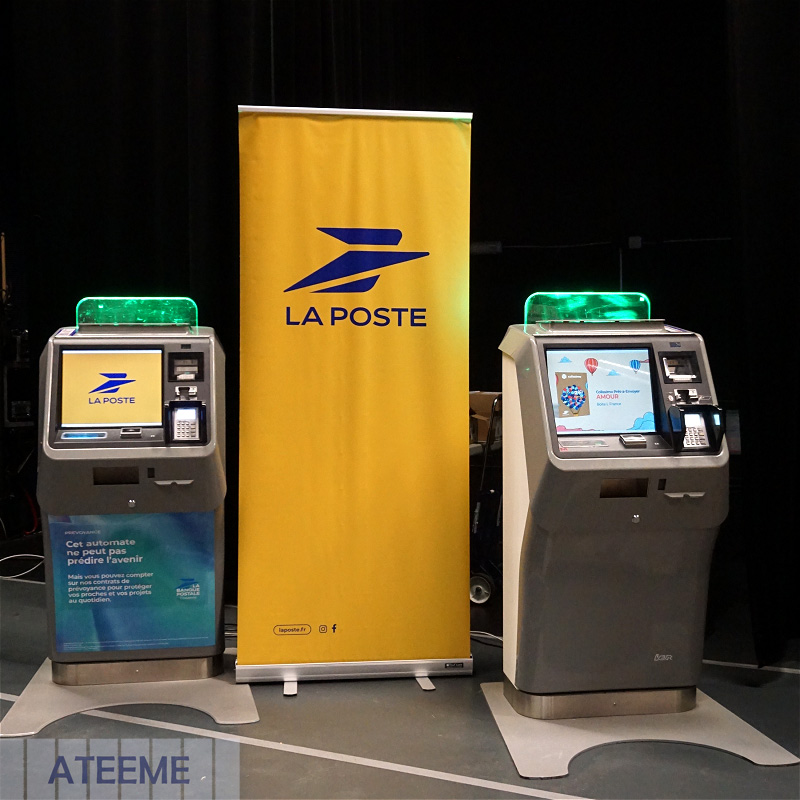
Both kiosks enabled the printing of stamps for domestic mail “LETTRE VERTE” (prefix “DD”) or international mail “LETTRE INTERNATIONALE” (prefix “IP”), as well as stamps for registered mail (“LETTRE RECOMMANDÉE” – always with Datamatrix code), starting from a minimum programmed value of €1.00.
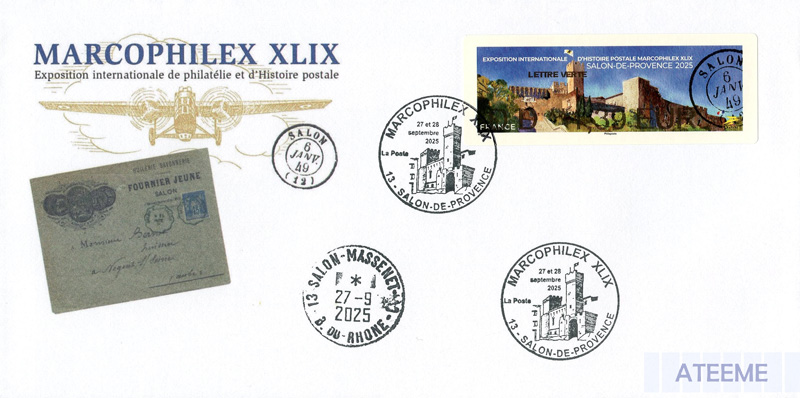
The organisers produced a special illustrated cover for the exhibition.
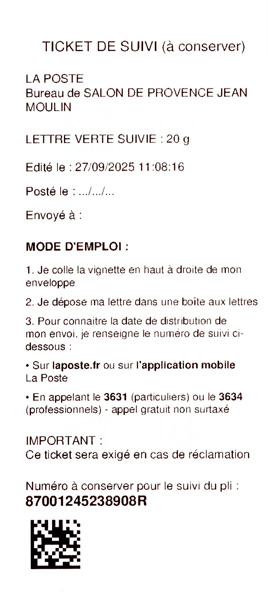
At the request of some visitors on the Saturday of the exhibition, and during the following weeks for the general public, the LISA issue was available at an IER NAT kiosk installed at the La Poste Jean Moulin branch. Stamps issued by this kiosk with the normal tariff programme and no minimum value programmed include the usual Datamatrix code and the La Poste logo in the lower right-hand corner. The images show a “LETTRE VERTE SUIVIE” stamp for tracked domestic mail, with its corresponding receipt.
The printout from IER NABANCO kiosks is very similar to that of NAT machines, although the latter’s printout is slightly finer.
(English edition rewritten by J. Gareze – February 2026)
Access to this site, and to the website in general, is monitored and its contents are protected by copyright.
The unauthorized copy of the text and / or images is prohibited